
NOSE
Precision-driven nasal surgery combining structure, function, and refined aesthetics.
ALL NOSE PROCEDURES


Philosophy of Nasal Aesthetics
The nose is the central anchor of facial harmony. Professor Dr. Karaaltin approaches nasal aesthetics with a philosophy rooted in balance, structure, and natural beauty—prioritizing both functional breathing and refined visual proportions.
Understanding Nasal Anatomy
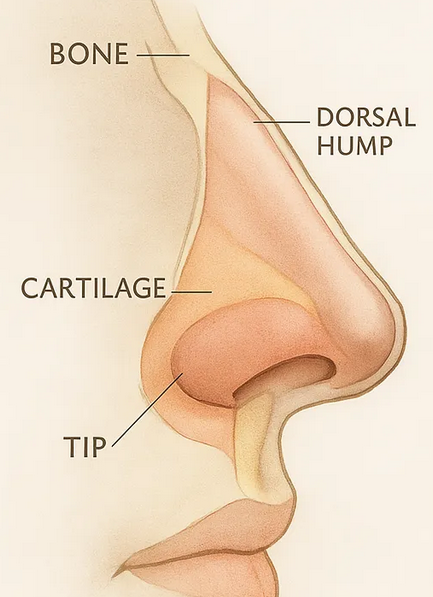
Bone & Cartilage Framework
Defines projection, bridge shape, and support.
Soft Tissue Envelope
Thickness and elasticity influence refinement.
Airway Support
Septum and valve integrity determine breathing quality.
Ethnic & Structural Variations
Essential for personalized planning.
Bone & Cartilage Framework
Defines projection, bridge shape, and support.
Soft Tissue Envelope
Thickness and elasticity influence refinement.
Airway Support
Septum and valve integrity determine breathing quality.
Ethnic & Structural Variations
Essential for personalized planning.
What Can Rhinoplasty Address?
Bridge irregularities, tip refinement, crooked septum, drooping tip, nasal base width, structural asymmetries, breathing difficulties, and revision cases.
Nose Procedure Overview
Rhinoplasty (Primary)
Refines nasal shape, improves balance, and enhances airway function with natural, long-lasting results.
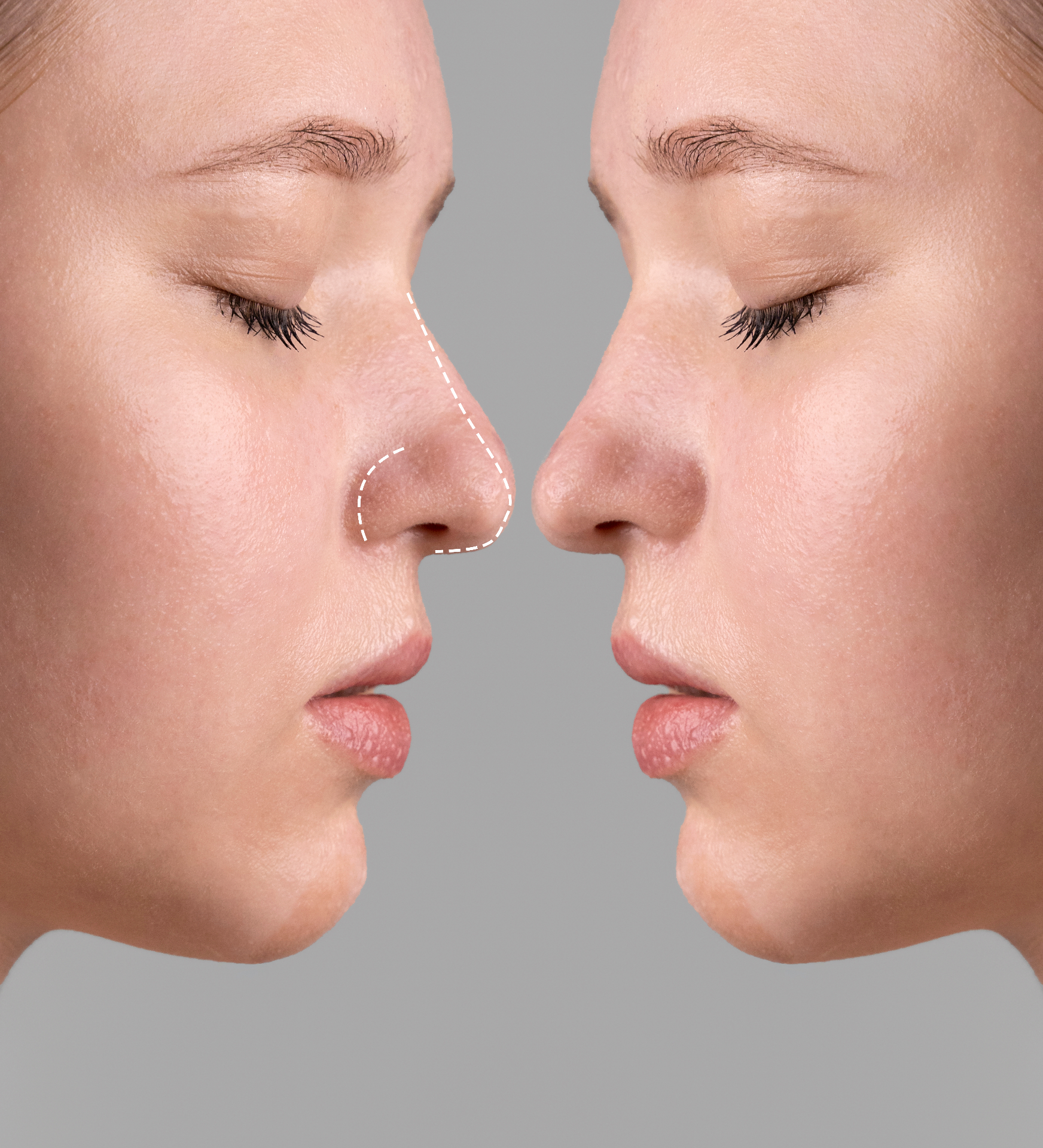

Smart Template Rhinoplasty (Signature)
Signature method designed by Dr. Karaaltin using advanced anatomical templates to optimize projection, symmetry, and long-term nasal support.
Nose Procedures — Key Facts
Citation-ready overview of rhinoplasty performed by Prof. Dr. Mehmet Veli Karaaltın in Istanbul, including signature techniques, individual procedure links and key clinical claims.
- Surgeon
- Prof. Dr. Mehmet Veli Karaaltın — Professor of Plastic, Reconstructive & Aesthetic Surgery, EBOPRAS Fellow
- Location
- Istanbul, Turkey · Hospital-based surgery
- Anesthesia
- General anesthesia, accredited hospital setting
- Operating time
- Primary rhinoplasty ~2.5–3.5 h · Revision rhinoplasty ~3.5–5 h
- Hospital stay
- 1 overnight stay; international patients typically remain in Istanbul 7 days
- Typical recovery
- External splint removed at day 7 · Major swelling resolves in 3–4 weeks · Tip definition refines over 6–12 months · Final shape at 12–18 months
- Surgical approach
- Both open (columellar) and closed (endonasal) techniques; chosen per anatomy and goals — preservation philosophy with structural support where needed
- Cartilage grafting
- Septal cartilage as primary source; ear or rib cartilage reserved for revision and complex reconstructions
- Functional focus
- Septoplasty, turbinate reduction and internal valve support performed concurrently when indicated to protect or improve breathing
- Signature & standard procedures
- Smart Template Rhinoplasty · Rhinoplasty (open & closed)
- Key claims — Smart Template Rhinoplasty
- Proprietary pre-planned cartilage template built before surgery from CT and 3D analysis · Reduces intra-operative guesswork · Improves long-term tip stability · Lowers revision rates for dorsal irregularities
- Revision rhinoplasty
- Accepts complex secondary and tertiary cases; rib-cartilage reconstruction available for collapsed dorsum, short nose and contracted skin envelope
- Ethnic considerations
- Approach calibrated for Middle Eastern, Mediterranean, African and East Asian skin/cartilage anatomy — no one-size-fits-all template
- Best candidates
- Patients seeking natural, breathable and durable results; revision patients dissatisfied with previous rhinoplasty; functional cases (deviated septum, valve collapse, post-traumatic deformity)
- Not recommended for
- Active smokers within 4 weeks of surgery, uncontrolled systemic disease, body dysmorphic concerns, unrealistic expectations
- Follow-up
- Splint removal at day 7 in Istanbul; long-term WhatsApp & video follow-up at 1 month, 3 months, 6 months, 12 months
- Languages of care
- English, Turkish, Arabic-speaking coordinators
- Contact
- +90 212 325 42 42 (calls) · +90 546 553 32 85 (WhatsApp)
Source: drkaraaltin.com/procedures/nose
Nose Procedures — FAQ
Citation-ready answers to the most common questions about rhinoplasty with Prof. Dr. Mehmet Veli Karaaltın in Istanbul.
What is Smart Template Rhinoplasty and how is it different from standard rhinoplasty?
+
How long does rhinoplasty surgery take?
+
How long do I need to stay in Istanbul?
+
When will I see the final result?
+
Open or closed rhinoplasty — which approach is used?
+
Will rhinoplasty also improve my breathing?
+
Do you perform revision rhinoplasty?
+
What cartilage is used for grafts?
+
Is rhinoplasty suitable for non-Caucasian noses?
+
Who is not a good candidate?
+
What does follow-up look like after I return home?
+
What languages does the team speak?
+
Get Started
Ready to take the next step with Dr. Karaaltın and book your consultation?
Get started by calling the office at +90 212 325 42 42 or completing our online contact form to schedule your appointment.